





Georgie's summary:
A workspace and its design language communicate far more about a business than its brand identity. In this article, we explore the role office design plays in employer branding and how the right environment can bring your company culture to life, strengthen the employee experience and help potential new hires picture themselves as part of it.
Businesses spend a lot of time thinking about how they present themselves to potential employees. Website careers pages, LinkedIn posts, employee benefits packages… they’re all important, of course, but something that’s often overlooked in this process is the workspace itself.
If your office design and physical working environment aren’t aligned with everything you portray everywhere else, employees and job candidates can see it immediately. You might describe your culture as collaborative, for example, but if there isn’t anywhere for people to work together effectively, the message doesn’t add up.
Another common example is wellbeing. You say on your website, social media pages and job ads that wellbeing is top priority but your office might be poorly lit, noisy and short on any diversity of work settings.
Innovation can be another sticking point for businesses. ‘Innovation’ might sit proudly amongst your company values but your employees are still battling with workplace AV and tech from another decade.
In this blog post, we explore how, when done right, office design can strengthen your employer brand, support company culture and create a space people genuinely want to work in.
Read more: What visitors notice about your office in the first five minutes >>
What is employer branding?
Employer branding is basically the reputation your business has as a place to work. It’s shaped by everything from your company culture and values to employee experience, career development, benefits and the way you communicate with candidates during hiring.
As we covered earlier, some of that reputation is carefully built through things like careers pages, job adverts and hiring initiatives. However, what it really comes down to is what employees and candidates actually experience for themselves, in real life.
That’s a really important distinction to make when understanding your brand as an employer. It isn’t just about telling people you’re a great company to work for; it’s about giving them reasons to believe it and living proof that what you’re saying is true. And, as we’ll explore, your office design is one of the places where that promise becomes much more tangible.
Now, let’s take a look at the key ways in which office design can help boost and bolster your employer branding.
Physically representing your ethos
A good employer brand gives people an idea of what they can expect from working for you. The role your office design should play is to prove that ethos through the physical workspace experience. Solid employer branding ensures that these two things match up and support each other.
If flexibility and autonomy are important to your business, for example, your office fit out should give people a choice of spaces to work from. If you want different departments to share ideas more often, the layout should make it easy for those people to collaborate through things like furniture, tech and noise control.
Another common example: If inclusivity is genuinely part of your company ethos, the physical environment needs to work for a broad range of people and needs, rather than simply saying the right things on paper.
It’s all about ensuring that the experience of being in the office and working for your company feels consistent with the culture you promote. When there’s a big gap between the two, employees and candidates tend to notice and it can hinder interest in working for you and loyalty to your business.
Demonstrating how you value your people
Investment in your workplace and the kind of physical environment you provide sends a message to the people using it. And by investment, we don’t mean having to spend enormous amounts of money on expensive furniture or constantly chasing the latest trend. It’s about showing that some thought has gone into what employees actually need from the spaces around them.
Things that fundamentally matter to employees don’t involve how Instagrammable the workspace is. They involve things like ergonomic furniture that supports different ways of working. Good lighting to reduce headaches and eye strain. Acoustic control to limit excess noise and distraction. Reliable technology that helps them do their jobs better. Having somewhere to eat lunch away from your screen and take a private call or work quietly.
They all seem like ordinary things but that’s partly the point. Good office design considers the realities of an employee’s working day. When the workplace makes those everyday things easier, it tells staff that their experience is being considered.
Communicating your brand identity
There’s an understandable temptation to think about brand in only visual terms when planning an office design or refurbishment. Company colours appear on the walls, logos up in receptions and welcome spaces and branded graphics are added throughout the design language. All of those things can help create a workplace that feels recognisably yours to the eye, of course, but as this blog post has taught us, employer branding runs much deeper.
Imagine removing every logo from your office and every brand colour. Or imagine if you were to move into a pre-designed, plug-and-play commercial office and you had limited freedom to influence the look and feel of it. Would the space still feel like your company?
So, how else can you communicate your identity outside of paint colours and brand manifestation? Here are some examples:
- A sustainability-led business might demonstrate its eco-friendly ethos through the materials it chooses and the way it approaches reuse.
- A company built around creativity might use its office layout to encourage teamwork and group idea-sharing with lots of collaboration spaces and resources to support both digital and analogue work.
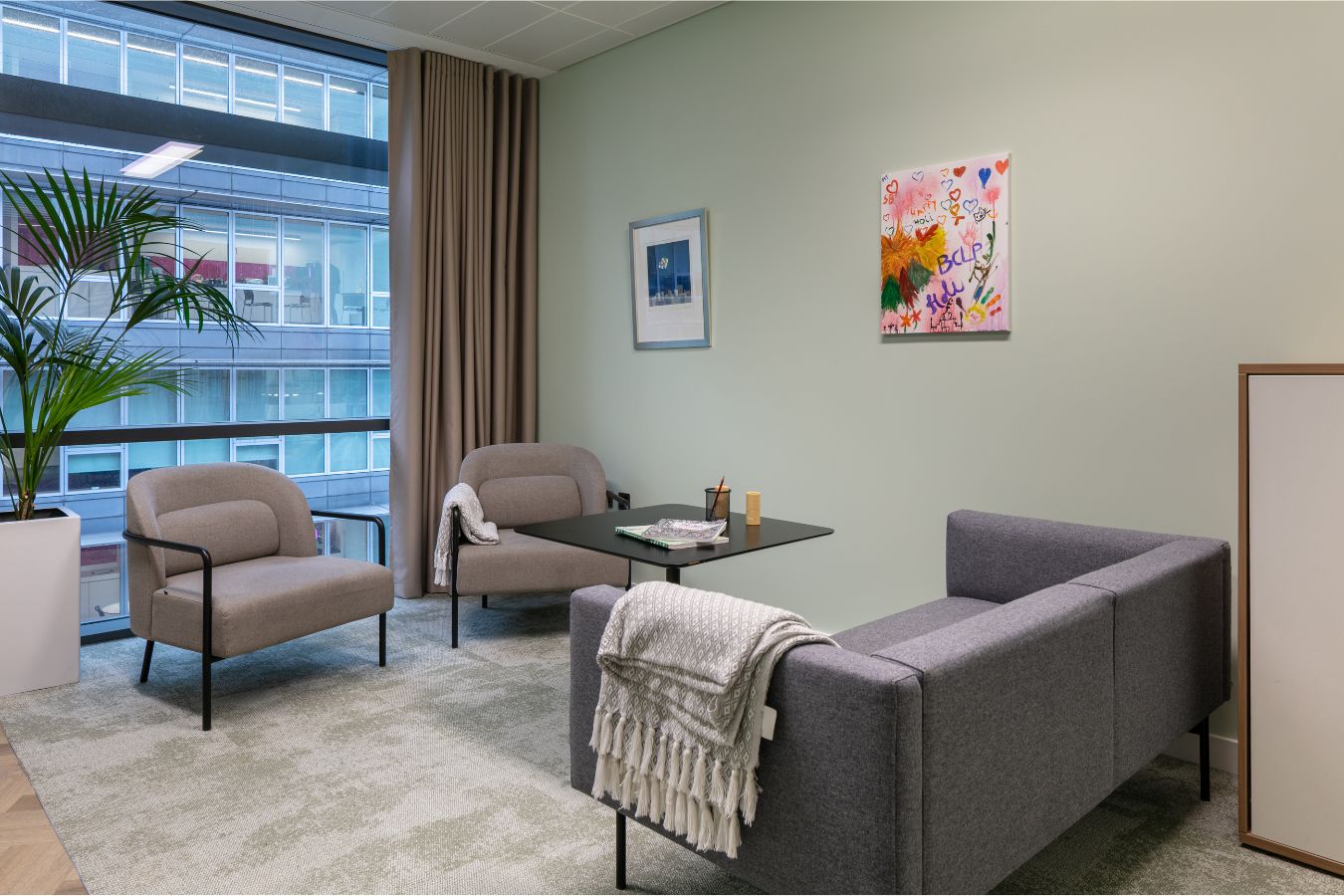
- A business that takes employee wellbeing seriously might prioritise natural light, enhanced acoustic control, inclusive access and on-site fitness spaces.
That’s when office design starts communicating something meaningful about the employer behind it, rather than simply looking on-brand.
Attraction and retention
Recruitment always gets a lot of attention when we talk about employer branding but attracting talent is only part of the job. Employer experience of your existing workforce is just as (if not arguably more) important as attracting top talent.
Looking at employer branding purely as a way to appeal to hiring candidates will only get you so far. Sure, it might turn the heads of the kinds of people you want to hire in your workforce. However, to ensure those same people become happy, productive, loyal members of staff, you need to ensure your approach to employer branding extends to the full employee experience.
As a new employee starts using the space, they quickly stop seeing the office through the eyes of a candidate and they begin experiencing all its day-to-day realities. The meeting room that’s impossible to book. The area that’s too noisy to concentrate in. The lack of somewhere private to make a call. The technology that hinders more than it helps.
Equally, they’ll experience the positive things. The dedicated social space where casual relationship-building happens. The quiet corner that’s perfect for when they need individual focus time. The collaboration settings where sharing something on screen or connecting a remote colleague doesn’t require IT intervention.
These everyday experiences gradually become part of how employees feel about the business itself. If the reality of working for the company doesn’t live up to what attracted them in the first place, your employer branding isn’t doing its job.
Positive reviews and recommendations
As with most things, word-of-mouth is what really boosts your employer branding because it’s solid proof that your company culture and ethos ring true. Platforms like Glassdoor and simple conversations are where word spreads about whether or not yours is a great company to work for.
People talk to friends and colleagues about work. They recommend vacancies to people they know. They share posts on their social media about work events. They post photos of the office if they feel proud of it. What people say and share about your workspace has a huge impact on the success of your employer branding.
It is important to note that this doesn’t mean it has to be the coolest office on Instagram. In fact, trying too hard to create something purely aesthetic-driven can miss the point entirely. What matters much more is creating somewhere that functions well, feels true to your business and gives people an environment they’re happy to be in and associate themselves with. That’s when office design becomes about much more than just interior design decisions and becomes part of your reputation as an employer.
That’s why employer branding deserves a place in conversations about office design and fit out from the beginning. Not because an attractive workplace can compensate for poor culture but because the right environment reinforces a good one.
Want to boost your employer branding with a workspace transformation? Get in touch to learn more about how our team of experts can help.