





Chris’s summary:
It’s completely understandable to focus on the cost of an office refurbishment. But in my experience, the bigger cost is often the one businesses don’t see. Small workplace frustrations build up over time, affecting everything from productivity and collaboration to recruitment and staff retention. This article looks at those hidden costs and why investing at the right time often delivers a far better return than waiting.
When workplace issues arise, they don’t tend to arise suddenly. Normally, changes happen gradually, over a long period of time, which is often why businesses tend to run with issues for longer than they should.
Teams adapt to the environment around them, work around limitations and slowly begin accepting certain frustrations as part of the normal working day. Eventually, though, the impact of these small inefficiencies grows into much bigger problems, including problems with things like productivity, staff retention and even revenue.
Recruitment becomes harder, output slows, collaboration starts feeling fragmented, the space layout no longer works or the office simply stops reflecting the business as it exists today. By that stage, the workplace is affecting far more than the appearance of the office alone.
Read more: The difference between decoration and interior design >>
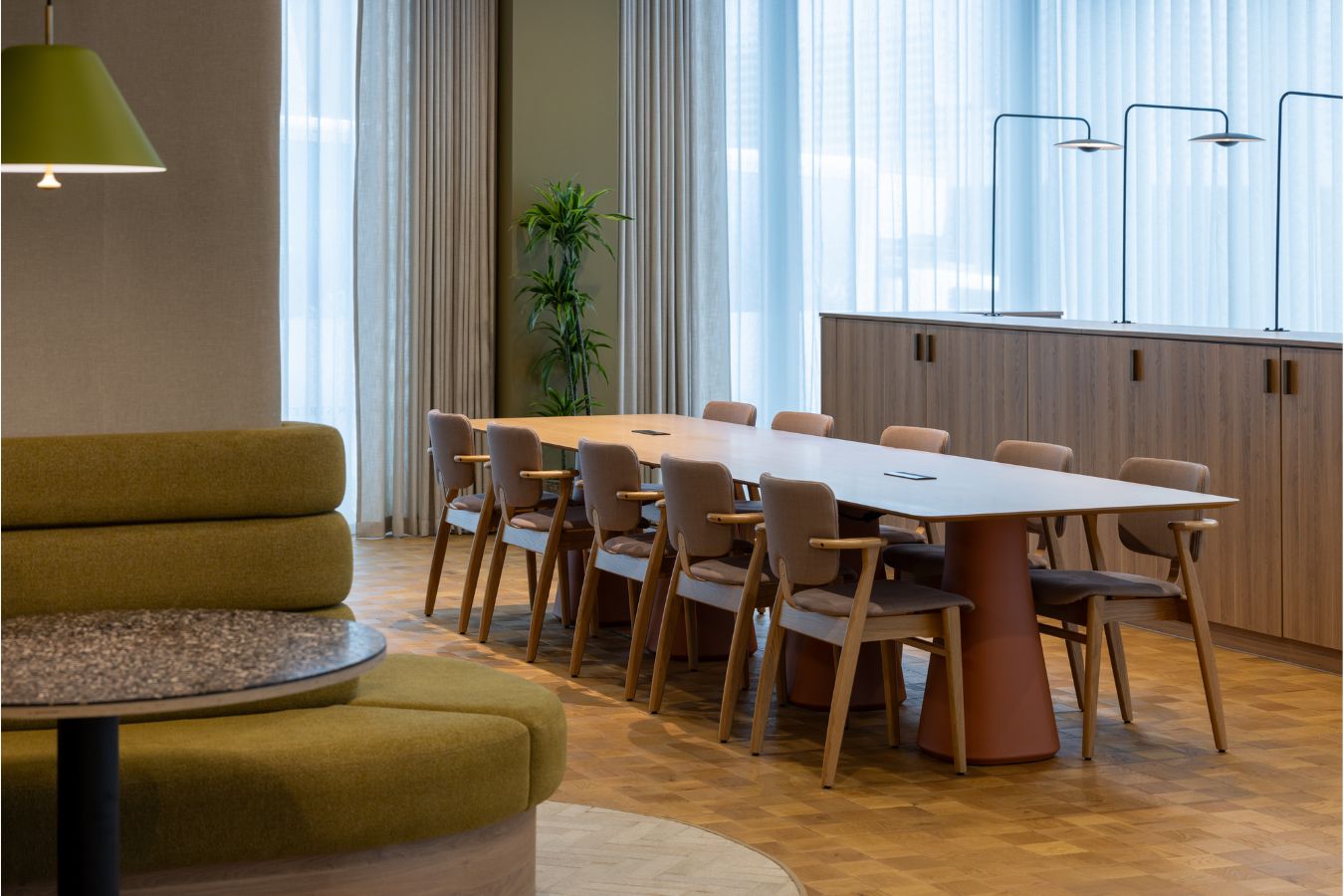
That’s why we always help our clients understand that a well-planned office refurbishment is about far more than just updating a workspace visually. It’s also about assessing and resolving operational issues that have developed over time and creating an environment that better supports the way people actually need to work.
Too often, businesses only seriously consider an office refurbishment once workplace issues become too difficult to ignore or once the impact is already on a large scale. But in this blog post, we shine the spotlight on the costs (literal and otherwise) of keeping an outdated office, so you can take a more proactive approach.
The space no longer suits your business
Many office environments are still built around working patterns that no longer really exist. This includes things like designated desks, spaces structured by team or department and formal meeting rooms. However, many businesses now operate in a far more fluid way than they did when those traditional offices were originally designed.
This is usually where some of the first signs begin appearing. Teams struggle to find suitable spaces for collaborative work, informal conversations spill into quiet areas, causing disruption and employees move around the offices reaching for privacy and focus. In some cases, people start avoiding the office entirely for certain tasks because it’s easier to create the working environment they need elsewhere (e.g. working from home).
Most of these issues don’t feel particularly big or business critical in isolation, or at least not in the beginning, which is why they often go unaddressed for so long. Over time, though, they begin affecting how smoothly the workplace functions day-to-day and the overall employee experience. Without reassessing how the office is being used, businesses can easily end up paying for space that no longer supports the way they operate.
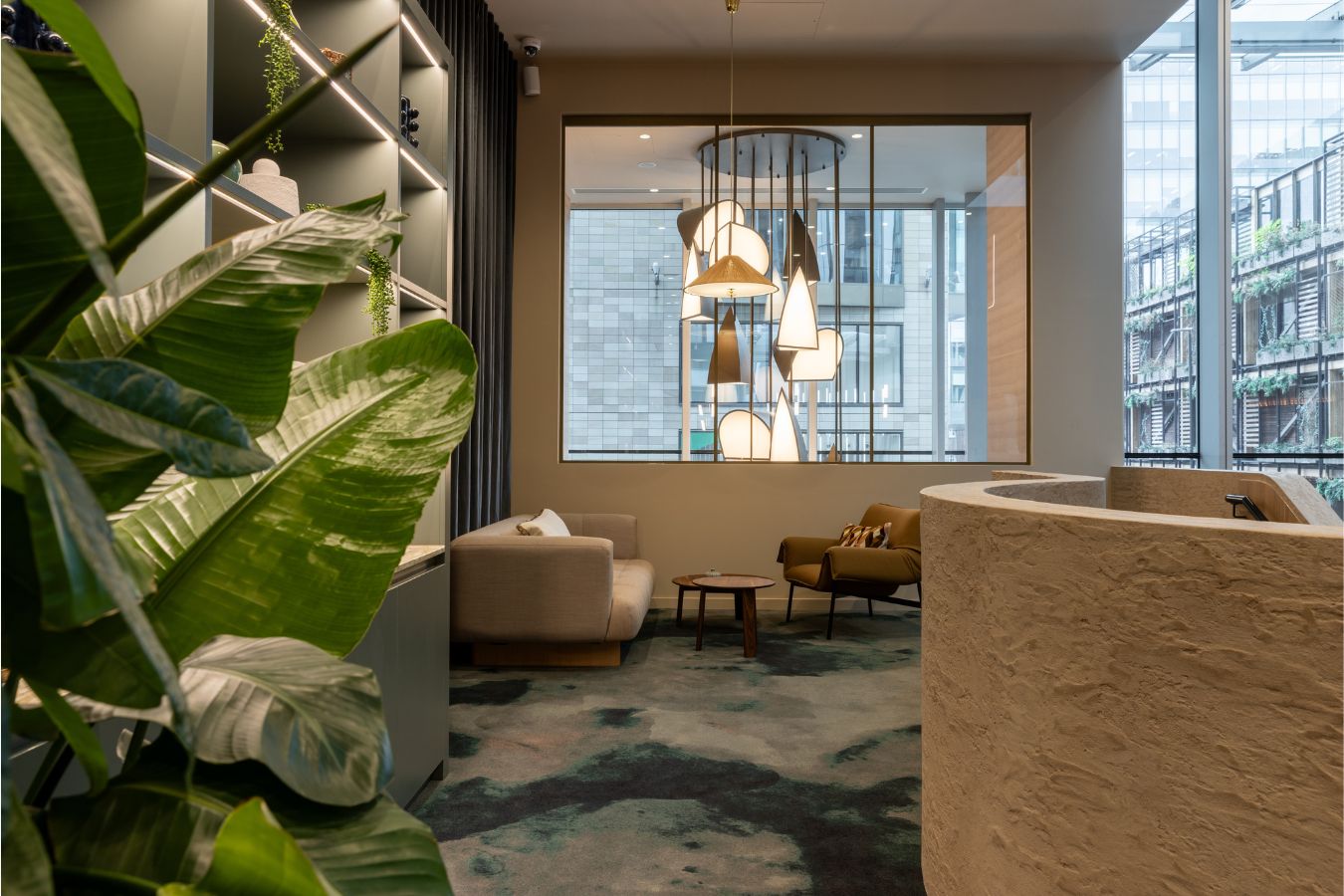
A workspace transformation can resolve these problems by creating a better balance between focused work, collaboration, informal interaction and flexibility across the workplace itself. It also creates a great opportunity to look at space utilisation more realistically and make better use of the existing footprint without necessarily increasing the amount of space required.
Read more: Balancing tradition and progression in office design and culture >>
Productivity takes a hit
When workplaces stop functioning efficiently, productivity doesn’t usually just plummet in a way that feels obvious or immediately measurable. More often, it begins dwindling through smaller interruptions that gradually become embedded within the working day, impacting productivity and motivation over time.
Poor acoustics make concentration more difficult than it needs to be, meeting rooms lack the right technology to collaborate effectively and concentration becomes harder to achieve. Again, employees begin working around the physical space rather than being supported by it.
Older office layouts also tend to create more friction between different types of work, particularly where collaborative activity and focused work are forced into the same areas without enough space division.
A well-designed office fit out tends to remove much of that friction by creating an environment that feels more fluid, more intuitive to use and better aligned with how teams actually work.
Read more: Zoning without walls: Space division in office fit out >>
The office feels disconnected from your business
Businesses usually evolve far more quickly than the working environment does. Teams grow, behaviours evolve, branding changes, and company culture develops over time, but physical work settings tend to remain untouched for a long time. This creates a divide between how the business is growing and how the workspace supports it.
That disconnect eventually becomes noticeable. The workspace no longer reflects the business properly, either internally or externally, and the environment starts feeling slightly out of step with the teams using it.
For example, you may want to increase innovation in order to offer new products or services. This may require fresh talent and new teams that the business hasn’t historically had. It’s likely that modern roles and departments are going to be looking for less traditional work settings, so to attract and retain this, and achieve innovation, the workspace needs to be set up to support, not hold back.
Addressing this isn’t just about creating a more design-led workplace or following trends. It’s about making sure the environment still feels aligned with the business and supports the experience the company wants employees, visitors and clients to have when they spend time there.
Recruitment and retention feel like hard work
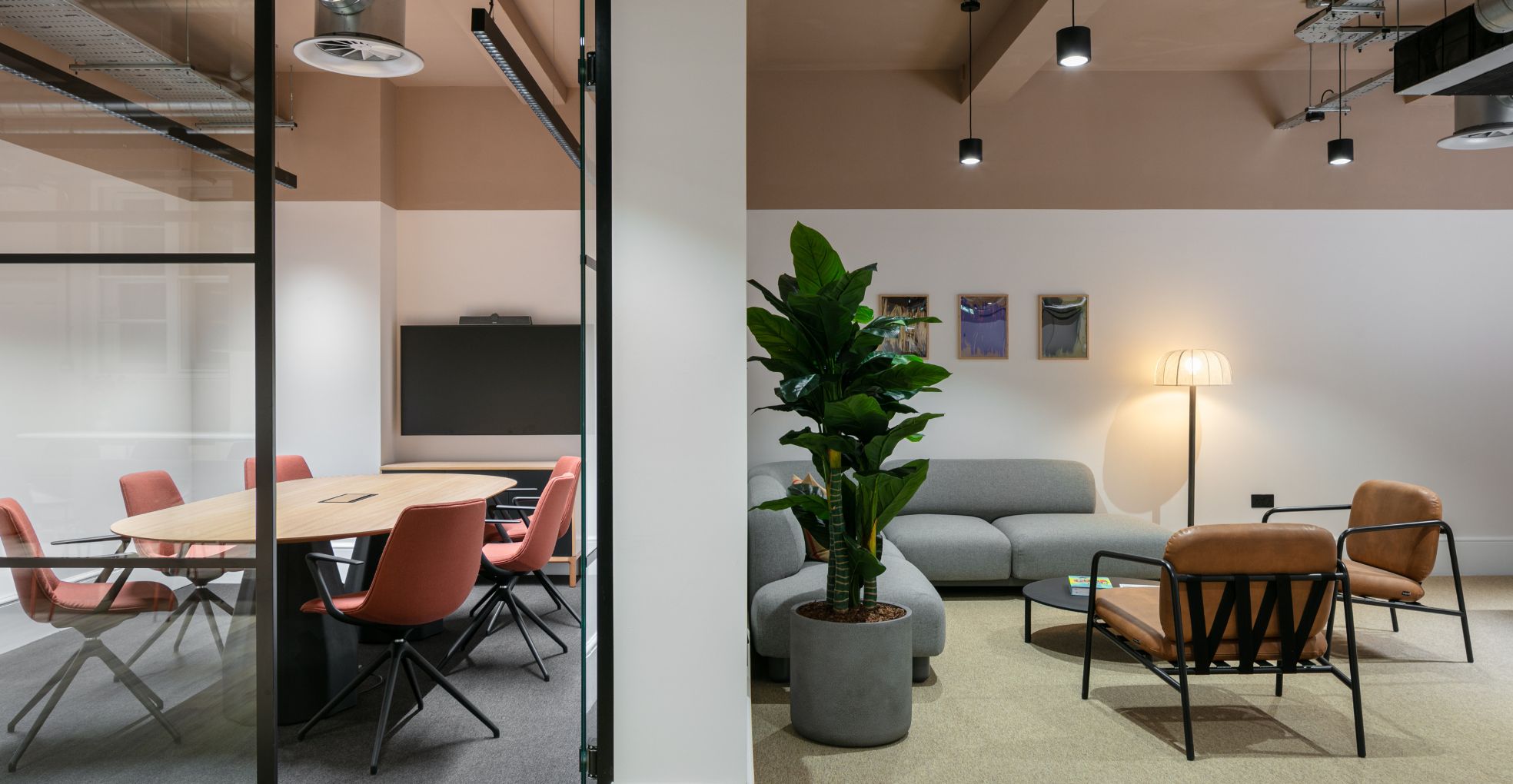
The workplace has become a far more visible part of the overall employee experience than it was previously. Today, the office has the potential to become a ‘destination of choice’, not just a mandatory working location. Candidates notice it during interviews and office visits, while existing employees naturally compare it with other environments they have worked in or experienced elsewhere.
An office that feels outdated can unintentionally create the impression that the business itself is slightly behind the curve, even where that is not necessarily true operationally or culturally. This is particularly noticeable in industries where talent competition is already high and businesses are trying to position themselves as progressive, adaptable and people-focused.
A strategic office fit out doesn’t need to feel excessive or heavily trend-led, but employees generally want to feel that the environment they work in has been designed with their wellbeing and success in mind, rather than simply maintained at a basic functional level.
Tech becomes a daily frustration
Most businesses now rely heavily on technology throughout the working day, but many older offices were never really designed to support that properly. This means workplace tech has been introduced into offices that aren’t really set up to accommodate it or integrate it as seamlessly as it needs to be. As a result, day-to-day inefficiencies start to surface.
Video calls are awkward to manage, connectivity varies depending on where people are sitting, meeting rooms lack proper integration, charging points never seem to be where they are actually needed and remote participation is left to be a struggle.
A modern office fit out tends to address this far more effectively by considering technology as part of the infrastructure of the workplace from the beginning rather than layering it into the space afterwards. This includes things like tech-integrated furniture and specific video conferencing rooms, as well as acoustic enhancements and non-tech spaces for analogue collaboration.
Read more: Facilitating digital and analogue creativity in the workplace >>
Looking for support with your workspace transformation? Get in touch to learn more about how our team of experts can help.