





Georgie's summary:
Having worked on office design projects for companies of all sizes, I’ve seen how easy it is for the physical space to fall behind the organisations using them. In this article, we look at some of the everyday workplace issues that signal an office has been outgrown and why recognising them early can make all the difference when planning your next workspace refurb or fit out.
Most businesses won’t suddenly realise one day that they’ve outgrown their office. It will be a gradual thing that you probably won’t notice until workplace issues become big problems.
Things that seem small on their own — like moving a meeting to the workcafe because every room is booked or taking a call outside because there’s no privacy inside — eventually compound. They’re easy to ignore in isolation but they’re common signs that your workspace is no longer serving you.
These signals are likely telling you that your physical working environment is no longer in sync with your business and its workforce. Your current office might have been designed and fitted out when the business had fewer people, a different company culture or entirely different ways of working.
Human nature means we’re super adaptable and creating workarounds just to crack on with tasks is what we generally do. However, it’s important to notice when these workarounds, habits and improvisations are all happening because they’re telling you it might be time for an office refurbishment or even an office relocation.
That said, it doesn’t automatically mean it’s time to move. In fact, one of the biggest misconceptions about office refurbishment is that businesses only need to invest in their work setting once they’ve run out of space. Often, the issue isn’t actually the building itself. It’s that the office has stopped supporting the business that’s grown inside it.
In this blog post, we spotlight seven common signs you are outgrowing your current working environment and that it’s probably time for an office transformation.
1. Daily work life is a struggle
The one-size-fits-all approach to commercial interior design that was taken for many decades now no longer really fits anybody (or any business). So many businesses are shoehorning themselves into offices and making do with the layouts, furniture and technology that are already there.
However, the ways we work, interact, focus and even recharge during the working day are so different and because office design hasn’t moved as fast, it’s really easy to outgrow your working environment.
Some of the most common struggles you (and many other businesses) face:
- Client calls and meetings are taken in touchdown spaces or breakout areas because meeting rooms are fully booked by staff.
- Performance reviews or other managerial conversations happen in kitchens and canteens because there is no privacy in the main workspace.
- Meetings between pairs or small groups take place in large boardrooms because there are no other suitable settings away from the desk.
- Training and R&D initiatives have to happen off-site or in boardrooms or meeting rooms that aren’t flexible enough for learning activities.
- Lack of space or appropriate settings means people gather around desks, creating high levels of noise and distraction.
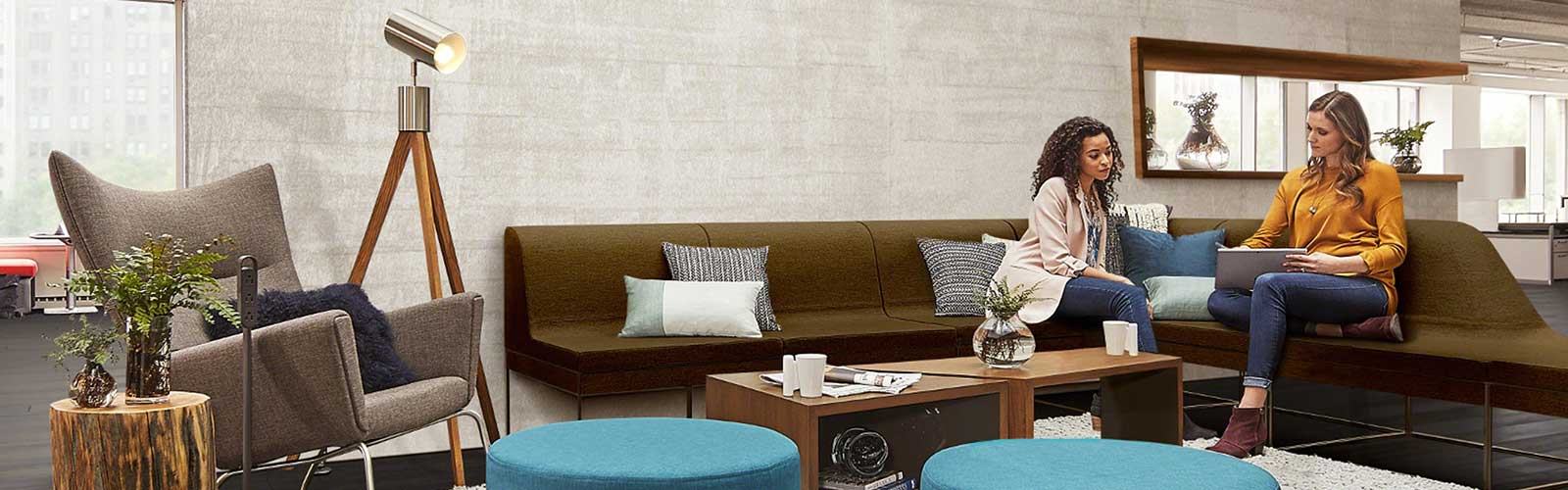
A big part of this problem and one of the most critical root causes, is that commercial office design is still so attached to the traditional tethered desk idea. So many modern workspaces are still designed and planned around the idea that every person needs their own dedicated desk.
However, it’s essential to now recognise that people need different environments depending on what they’re doing and how they prefer to work. People need to be able to find a work setting that suits their personal needs, whether it’s:
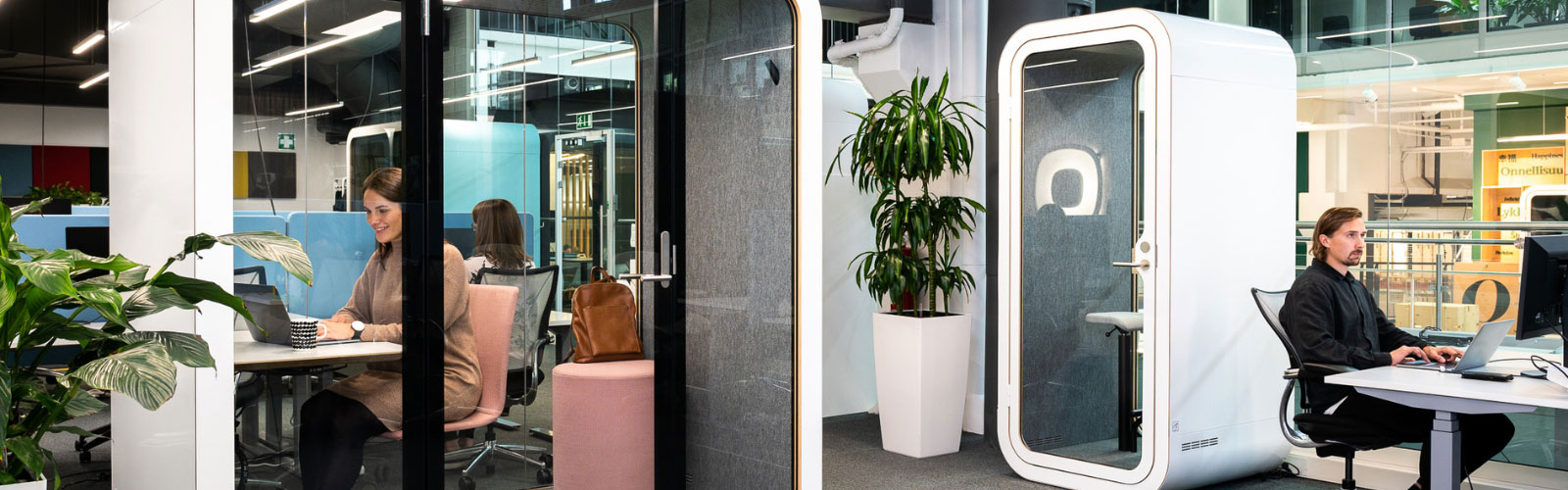
- Privacy (more on this next)
- Team collaboration
- Impromptu touchdown chats
- Large group meetings
- Individual focus
- Learning and training
- Hosting clients and visitors
- Socialising and rejuvenation
Discovering the kinds of settings your employees actually want and need is the key to ensuring your working environment grows with your business. Letting tradition or trends guide your design decisions will only lead to you outgrowing the space over and over again.
2. Privacy is hard to find
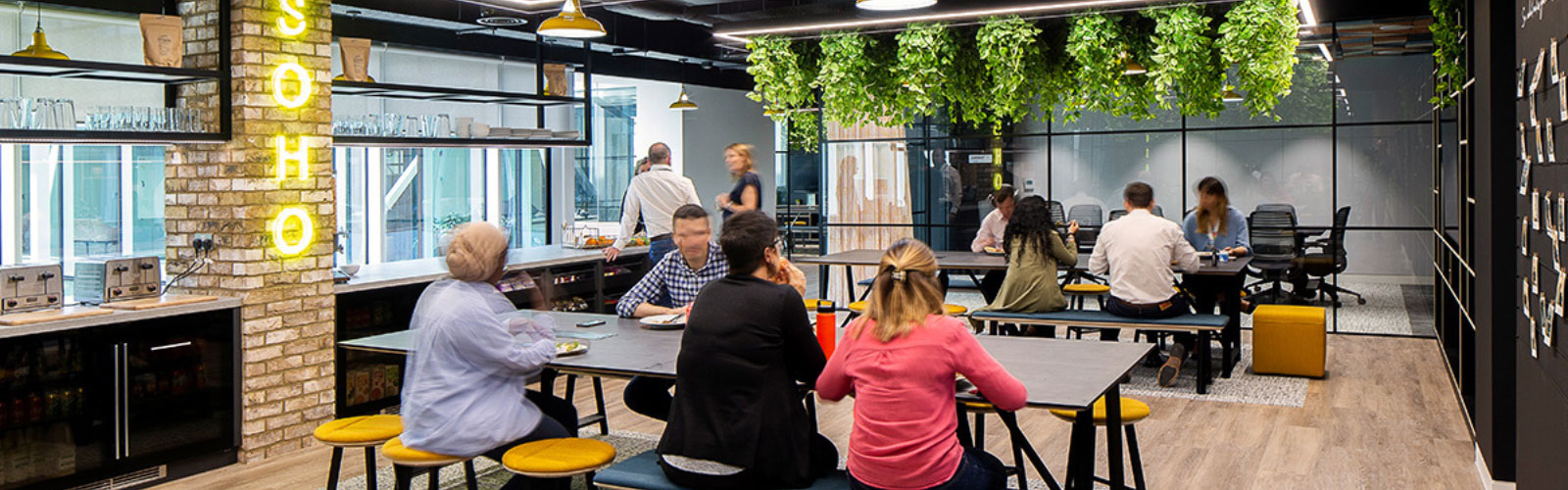
In the same way that tasks require different types of work settings, different kinds of conversations need their own dedicated spaces too. Common examples include:
- Confidential conversations that you don’t want to be overheard, such as an interview, HR chat, disciplinary meeting or manager one-to-one.
- Quiet conversations that need no noise disruption, such as client calls, recruitment and IT, for example.
- Impromptu conversations that weren’t planned but happen spontaneously and require somewhere they can continue. Sometimes, these are also private interactions that need to be undisturbed and not overheard.
When these kinds of conversations regularly happen in corridors, kitchens or empty meeting rooms, privacy is compromised, which can lead to a number of issues, including:
- Frustration and anxiety for staff
- Comprised legal regulations
- Hindered internal and external communications
- Misinterpretation of overhead information
- Avoidance of raising sensitive topics due to the lack of privacy
The same applies to focused work. Most jobs involve periods where people simply need to concentrate without constant interruptions, yet in many traditional offices, there are surprisingly few places where that’s realistically possible.
Read more: Designing for collaboration and concentration >>
3. You’re literally running out of room
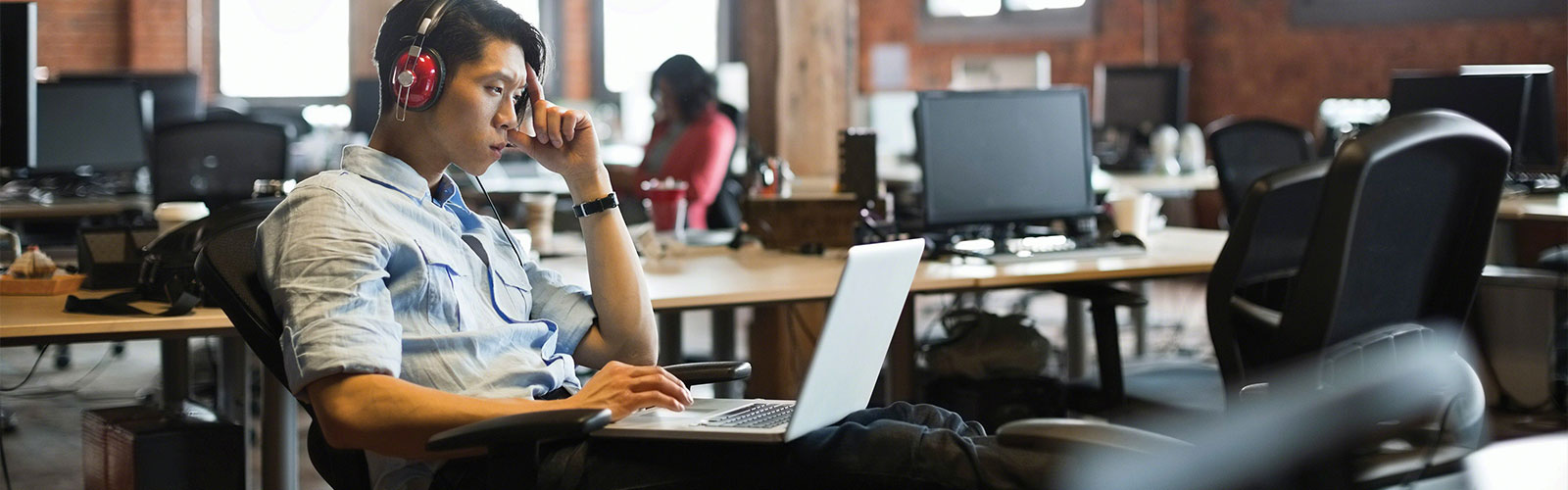
Another obvious indicator that you’ve outgrown your workspace in its current form is that you’re quite literally running out of room – for furniture, teams, people, technology, etc.
One new starter quickly becomes three. A department expands. A new product launches, which needs additional technology. Storage disappears to make room for it all. Teams get split across different parts of the office because that’s where the spare desks happen to be. Before long, the office is full and everywhere feels overcrowded.
None of these decisions is necessarily wrong at the time because they’re practical solutions to immediate problems that keep business-as-usual moving. However, it’s essential that temporary fixes aren’t seen as permanent features the same problems will just keep resurfacing.
That’s why, sometimes, an office refurb is firstly about removing years’ worth of small compromises before designing the space around how the business operates today instead of how it operated five years ago. For some businesses, this will mean opening another office, taking on additional space in the same building or relocating to a bigger, more suitable space.
Read more: National office presence and multi-site projects >>
4. More people are working remotely
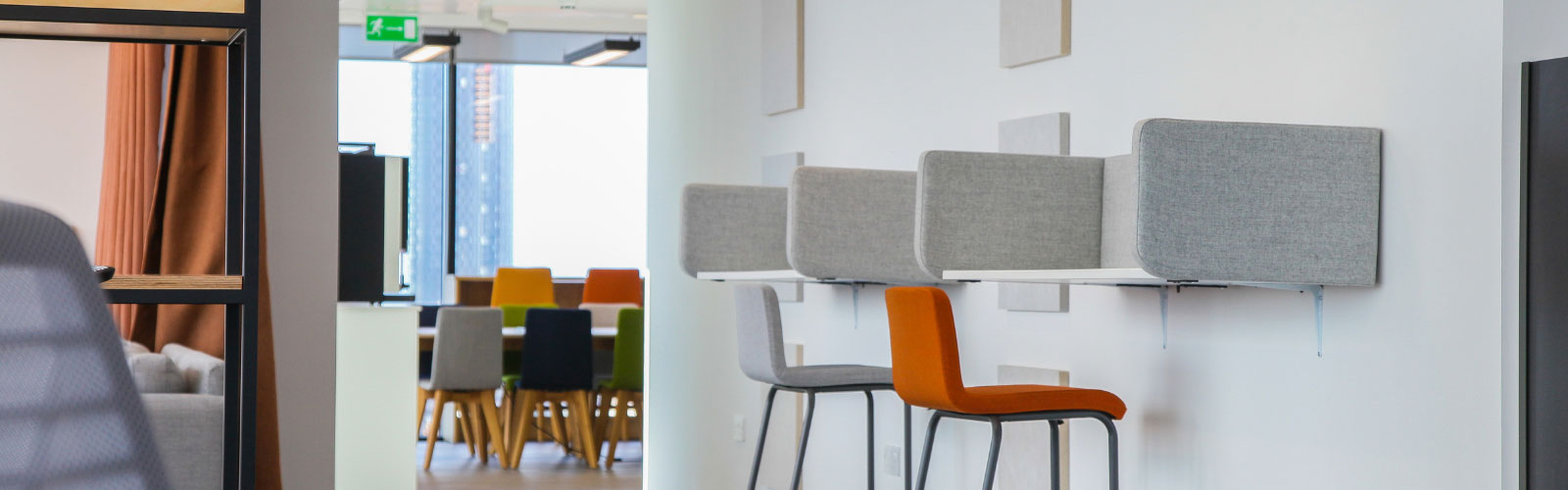
Every business will have employees who prefer to work from home from time to time and that’s not a problem. Lots of companies now have remote working policies and embrace hybrid ways of working and the benefits it brings. However, if you find that more and more people are actively choosing to avoid the office whenever they can, it’s worth asking why.
It’s easy to assume the answer is simply that people prefer working remotely and in a lot of cases, that could be the simple reason. But we typically find that, in reality, if business owners dig deeper, the workplace itself often plays a bigger role than they realise. If it’s difficult to find somewhere quiet to concentrate, there aren’t enough spaces to collaborate comfortably or poor acoustic control causes a lot of distraction, it’s understandable that people look elsewhere for the environment they need.
The best workplaces give people reasons to come in. They make collaboration seamless, provide diverse settings for different types of work, support conversations that can’t happen as naturally over a video call and create an environment that feels comfortable, functional and genuinely enjoyable to spend time in.

5. The space doesn’t match your ethos
Most businesses have a pretty clear idea of the kind of culture they’re trying to foster. This often involves things like smooth collaboration, ongoing innovation, work-life flexibility, open idea-sharing and giving people more choice and control over how they work. These ideas often manifest in company value documents, recruitment campaigns, website ‘About’ pages and internal comms.
However, we often find that the physical working environment tells a different story or, at least, doesn’t align with or reflect this same ethos. For example, it’s hard to encourage collaboration if there are very few places where people can do this comfortably. Equally, it’s difficult to expect people to spend more time in the office if the environment doesn’t provide the tech or furniture needed to complete tasks.
The same applies to focused work. If employees are encouraged to take ownership of how they manage their day, but every task has to be carried out in exactly the same environment, the office can quickly start feeling restrictive rather than supportive.
When there’s a clear link between company culture and office design, the workplace feels far more intuitive. When those two things drift apart, people often end up working against the space rather than with it and the physical environment is at odds with the culture you’re trying so hard to cultivate.
Time for transformation?
Outgrowing an office isn’t always about running out of space. Quite often, it’s about reaching the point where the workplace no longer supports the way the business operates. Sometimes it can mean creating more space but most of the time, it’s about making better use of the space you already have.
An office refurbishment is an opportunity to step back and look at the workplace a little differently. Not just in terms of how it looks, but how it performs, how people move through it and whether it’s still helping the business work in the way it wants to.
So, if any of the signs we’ve explored here sound familiar, or if you’re struggling with other workplace issues, it’s worth taking a step back and asking whether your office is still working as hard as the people using it. If not, it’s time to rethink your environment.
Read more: The hidden costs of keeping an outdated office >>
Get in touch today to learn more about how our team of award-winning workspace experts can help.