






Open-plan offices have become one of the most popular workplace layouts over the past decade and for good reason too. Open-plan spaces promote collaboration, flexibility and efficient use of space and help foster a sense of community and connectedness in the workplace. However, with these benefits also comes a notorious downside: noise.
Excess sound from conversations, phones, movement and general daily activity can quickly impact concentration, increase stress and reduce overall productivity. The good news? With careful fit out planning, targeted acoustic solutions and strategic product choices, open-plan office design can be super successful.
In this blog post, we explore seven tried-and-tested acoustic solutions that are effective in open-plan offices, as well as some practical examples and product suggestions from our experts. So, whether you’re planning a fit-out or managing an existing workspace, these ideas will help you keep unwanted noise at bay.
Acoustic space zoning
One of the most effective ways to manage noise in an open-plan office is to plan how different spaces and work settings will be used. That way, you can create areas of the office where more noise and activity are to be expected and other areas dedicated to much quieter work.
This is what we call acoustic zoning when designing ecosystems of work settings for our clients. This spatial strategy helps create a natural flow where high-interaction areas are deliberately placed away from spaces with much lower levels of noise and activity.
Taking this approach means that dynamic collaboration spaces in breakout areas never need to be hushed, while those looking for quiet focus can always find somewhere to settle without disruption or disturbance.
Practical tip for small spaces:
You don’t need a multi-floor office with sprawling square footage to incorporate acoustic space zoning. Privacy booths, acoustic dividers and enclosed booths are all examples of freestanding acoustic solutions that can be implemented into a small office fit out.
Read more: How to make a small workspace work harder for your teams >>
Sound-absorbing materials
Hard, reflective surfaces like plastic, glass and metal tend to amplify sound, causing noise to travel further and linger longer. One of the most impactful interventions to stop this killing your team’s productivity and focus is to introduce soft, sound-absorbing materials where possible. This could be on ceilings, walls or floors, or introduced through light fixtures, furniture and other sound-absorbing finishes such as rugs and cushions.
Installing acoustic panels or baffles, for example, will stop sound reverberation in its tracks. This will eliminate that annoying echoey sound that makes an office feel much louder than it actually is. Acoustic materials will absorb this kind of excess noise before it can spread across the space.
Our advice:
Acoustic solutions don’t have to mess up the look and feel of your space. With the right products, they can slot seamlessly into your design language and aesthetic. Speak to your office fit out or design partner about design-led, acoustically-enhanced furniture, lighting and decor features that look fabulous but are super functional too.
For example, the Penketh Interiors team installed acoustic wood panelling in an on-brand colour for our Liverpool-based client, JB Leitch, to enhance the acoustic performance of their boardroom and executive suites.

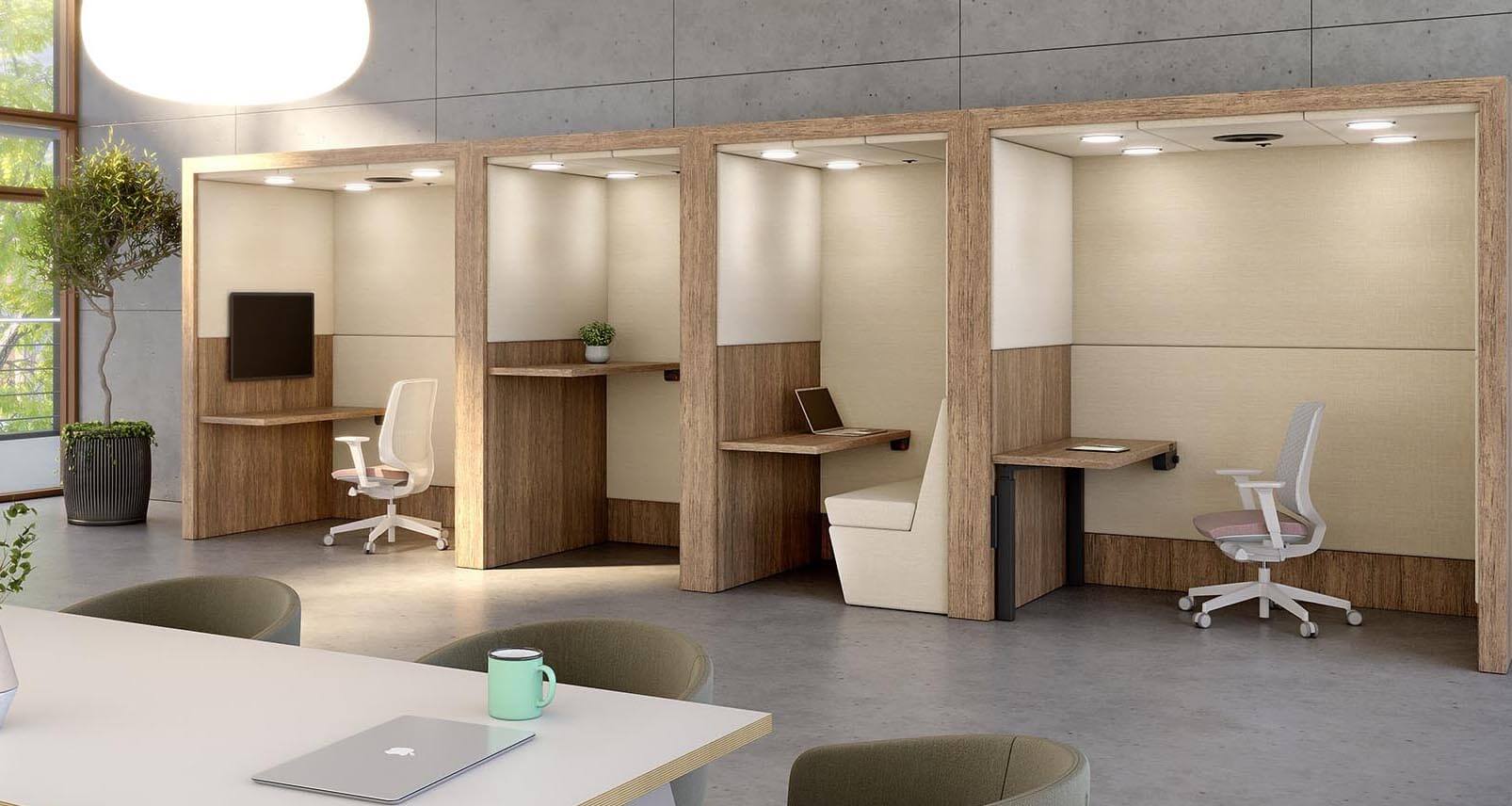
Enclosed pods and micro-meeting rooms
Rather than relying solely on open collaborative areas, providing enclosed or semi-enclosed pods and ‘Zoom rooms’ gives teams somewhere to take calls, have small group interactions, find individual privacy and work without disturbing others or being disturbed themselves.
These enclosed areas should be strategically positioned in quieter spaces or transitional zones to protect their peace and privacy as much as possible. Their solid construction dramatically reduces the spread of sound, providing pockets of quiet in open-plan environments.
Strategic use of plants and biophilic elements
Indoor office plants do more than enhance aesthetics and improve air quality – they’re real multi-taskers. When used thoughtfully and strategically as part of a commercial design scheme, they also contribute to acoustic performance. Large planters and thick indoor foliage can act as natural noise diffusers and sound absorbers, especially when clustered around collaborative zones and social spaces.
Plants help break up the spread of sound waves and reduce reverberation, particularly in large and open-plan floorplates. Combining greenery with acoustic substrates (the posh word for soil and planters with fibrous liners) further enhances their sound-absorptive qualities.
Pro indoor plant tip:
If you want to pick out plants that will help the acoustic performance of your open-plan workspace, we recommend choosing:
- Ficus trees
- Rubber plants (e.g. Rubber Fig)
- Peace Lilies
- Snake plants
- Large palms
- Swiss Cheese plants (e.g. Monstera)
All of these have large or dense leaves and can be planted together in thick clusters or landscaped to create indoor living walls.

Behavioural and working practices
While products, acoustic solutions and strategic fit out are all essential, behavioural strategies and working habits are also essential for acoustic performance in open-plan spaces. What this means is that your physical environment needs to work hand-in-hand with the people using it for optimal noise control.
For example, if you have members of staff who disregard the function of a silent focus setting, your acoustic space zoning isn’t going to work. That’s why clearly designated areas and reminders about respectful use of space are so critical to long-term acoustic comfort.
Advice from our experts:
- Clearly signpost quiet and collaboration zones.
- Provide high-quality headphones for staff.
- Encourage designated space use according to task and requirement.
- Create a company handbook for employees to follow and make it part of onboarding new members of staff.
- Include staff in key office design decisions because buy-in from them means they’re more likely to use the space as it is intended to be used.
Read more: Why employees should be involved in the office design process >>
Taking an acoustic approach
Acoustics in open-plan offices should never be an afterthought. Sound considerations should always be a core part of design strategy, incorporated from the very beginning – especially if noise disruption is one of your key workplace issues.
By combining spatial planning, sound-absorbing materials, acoustically-enhanced products and behavioural guidance, you can create environments that are both collaborative and comfortable.
Need some help incorporating these acoustic solutions into your next fit-out? Our team of workspace specialists can support you from planning through to delivery.
Get in touch and tell us all about your project – we can’t wait to hear about it.